Contestant Experience
A month before the 1987 Casadesus Competition, Steve Glaser’s hand was injured in an accident. He told a reporter he was relieved. “‘Psychologically it’s released me from the pressure of competing in an international piano competition. I’m looking forward to it’” (Daily Jeffersonian, Cambridge Ohio, Aug. 14, 1987).
Piano competitions can be fierce, especially at the international level. The stakes are higher and the players at their best, and for many, the pressure is no less. But these events can hold more for competitors to experience than simply stress. From planning outings, to parties, to arranging for host families, CIPC has always aimed to make the pianists’ two weeks in our city as enjoyable as possible, both at the piano and away from it. To learn more about our competitors’ experiences, we conducted a survey of all our past medalists. Here, I share some of the responses along with newspaper reports to celebrate the environment our organizers have worked hard to foster over the last 50 years.
Encouraging a positive environment is important for fostering relationships. Adele Arno, who competed in 1987 and returned in 1991, told Elaine Guregian of the Beacon Journal that she “made an exception to her usual policy of never attending the same competition twice to return to Cleveland. Why? For one thing, the friendly atmosphere” (“Signed contract the real prize,” Aug. 1991). In a September 1995 letter to Karen Knowlton (then executive director), competitor Adrian Oetiker wrote, “In no other competition I felt treated as well as in Cleveland—so despite the rather discouraging result I do have very happy memories!”
This friendly atmosphere wasn’t exclusive to the late 1980s and early 1990s, and it left a lasting impact on many of our medalists. Even with the pressure of meeting a high bar in 1979, the whole group of competitors was incredibly friendly. Dan Newman, who took First Prize that year, told a reporter of The Dayton Daily News that “There was absolutely no animosity, no ill will. A lot of tears were shed when the group broke up.” Roberto Plano, First Prize in 2001, also told reporters that getting on with the other pianists made the hot weather more bearable. He “had fun getting acquainted with other pianists in the dorm, which is not air-conditioned. ‘It was very hot… but it was good to be together’” (Plain Dealer “Biggest surprise”).
Medalists have formed valuable personal and professional relationships in the competition. Our Third Prize medalist of 2003, Konstantin Soukhovetski, wrote to us that the competition “forged life-long friendships with colleagues” that positively impacted his career—friends like Kotaro Fukuma and Soyeon Kate Lee (who won First and Second Prize that year respectively). Laura Silverman, a local Clevelander who won Fourth Prize in 1977, told us that the competition led her to an important relationship with Herbert Strawbridge, the late president of the board of The Cleveland Orchestra. “He and his family became a great friend and supporter of me.” Several competitors wrote about their relationships with Gaby Casadesus. Beatrice Long told us, “Madame Casadesus gave me several valuable lessons, especially on Ravel and the music of Robert Casadesus. She also introduced me to Olivier Messiaen while we attended an opera together in Paris! Her mentorship inspired me to explore music for solo and duo piano.”
Some years, host families have housed the pianists or taken them on outings, to dinner, and the like. Many of our medalists wrote that their hosts were essential to their competition experience. Niel Rutman, the Fourth Prize medalist in 1985, became close friends with his host family. He told us that he “visited them as recently as two months ago in Asheville, North Carolina,” which would have been in early Autumn of 2023—a relationship that has lasted nearly forty years and is still going strong. Thierry Huillet, our First Prize medalist in 1987 and a juror in 2003 and 2011, shared similar sentiments about his host family. When asked if he formed any important relationships in the competition, he responded, “My dearest Connie and Dick Manuel, who were my hosts when I entered the competition, then again when I came to play in the USA. I was lucky to have some time with them again when I was a juror. I always have them in my heart.”
Medalists spoke about their positive musical experience as well. Our Second Prize medalist in 1995, Marina Lomazov, wrote to us about her fellow pianists: “I was so impressed with every other competitor and thought I was the worst one compared to everyone else.” Dan Riddle, who took second in 1981, wrote that “the staff and jury of the competition in 1981 were all so incredibly supportive and nurturing. It allowed all of us to perform to the best of our abilities.” Soukhovetsky remembers applying for CIPC specifically for an opportunity to play with The Cleveland Orchestra. Being the first year of the partnership, he was one of our first competitors to play with them, and his excitement was matched by the “super-enthusiastic local audience.”
Others have raved about our audiences to reporters. In 2001, Minsoo Sohn (who won Second Prize that year) told The Plain Dealer, “The audience was amazing… they were really focusing, even in the 20th century music,” and Gilles Vonsattel (who won fourth) continued, “In some competitions, they come to watch you do a tightrope walk… This audience was great from the first round” (“Biggest surprise was to the finalists in the Cleveland piano competition,” Aug. 11, 2001).
The medalists also discussed how their wins impacted their careers. Nikita Mndoyants, our 2016 Mixon First Prize winner, wrote that it “was the most important thing that busted and launched my career in the USA, in my homeland Russia, and also in Europe.” For Lomazov, “Things did not change immediately. But winning the silver medal has validated me as a pianist personally and professionally and I owe my career to that win.” And for Plano, the competition was part of a changeful time. “In 2001, I met my wife Paola just a month before entering the competition, so I can easily say that that year and Cleveland changed my life on all its aspects… Paola and I now have three daughters, and we currently live in Italy but we lived in the US for 7 years (where we became US citizens).”
We also asked our medalists to share some of their favorite memories of their competition experiences. Here are some of their answers:
- Spencer Myer: “Having grown up in Cleveland and witnessing the competition as an audience member and aspiring pianist, one of my life goals was to enter and reach the finals of my “hometown” competition. To this day, reaching the finals and performing the Beethoven 4th Concerto with the Cleveland Orchestra was my ultimate dream come true and the highlight of my life.”
- Yuko Nakamichi: “The time I spent with my host family. The visit to the lake with my host family was an unforgettable relaxing moment during the competition.”
- Antonio Pompa-Baldi: “Too many to choose from! My wife and I got married two weeks before the start of the competition, we literally came to Cleveland on our honeymoon. We did not speak a word of English, but immediately met so many wonderful people, all ready to help and support us. I’d say the warmth of everyone we met is perhaps the best memory, and it played a crucial role in our decision to move to Cleveland, less than a couple of years later.”
- Markus Pawlik: “The ‘crazy’ day of the 2nd round: Played well in the morning—went for a walk and got mugged—passed to the Semi-Finals—went to a restaurant with my host lady to celebrate and had to evacuate because of a roof fire!”
- KyuYeon Kim: “I moved to Cleveland to study with Sergei Babayan at CIM after this competition. One of our hot spots, “Starbucks” near our dorm during the competition became my homework-doing place. It was a great memory!”
- Marina Lomazov: “Meeting other competitors, some of whom became life-long friends. The competition also happened to be the first time I ever performed with orchestra.”
- Dan Riddle: “Meeting Madame Casadesus in Cleveland was a real thrill for me. I will always cherish her complimenting me for my performance of her husband’s cadenzas in the Mozart concerto. A few years later in 1984 I was lucky enough to have her as the chair of the jury in Paris at the Concours de Claude Kahn, at which I won the Premier Prix.”
- Francois Chaplin: “My best memory is the rehearsal with the orchestra before the finale of the Mozart concerto that I had chosen. I had never played with an orchestra before and Mozart, whom I revered, was for me a dream come true and I found the orchestra excellent.”
- Roberto Plano: “There are so many incredible memories, it’s hard to choose… my arrival in Cleveland (1st time in the Usa!), the time I spent with my host mother, Virginia DiPadova, the moment they announced the name of second prize and I understood that I won the competition… unforgettable memories that will never fade away.”
It would be a challenge to pick a favorite memory from CIPC’s 50 years, but the competitors and their experiences are certainly a highlight. Highlighting them is a fitting way to wrap up this dive into the archives. As we rapidly approach the 2024 competition, the staff at CIPC hopes that all future competitors find the experience as uplifting as it has been for half a century of world-class pianists.


The Breakup, pt. 2
In the last blog post, you saw how things got rocky between the founders of the competition and the newly formed Friends of the Competition in the early 1990s. While both groups wanted to see the competition flourish, they had different ideas of how to get there—and different opinions about what the competition should aim to do. Ultimately, the two groups would split, the Casadesus family withdrawing their support from the competition and the Friends taking charge. Here, I have summarized some of the most telling notes, letters, minutes, and articles held in our archives. You’ll notice tension building, threats and accusations being made, and a sudden end to a twenty-year partnership.
As the Clevelanders begin to plan for the 1995 competition, they took undated notes in January of 1994. In them, they record frustration with the "4 French plus Grant," by whom they likely meant Gaby, Therese, Odette, Grant, and Guy Casadesus (Gaby and Robert’s son). One of their primary complaints was that being on the board of the competition was technically the same as being on the board of the Robert Casadesus Society. The Clevelanders wanted to work on the competition, but they did not have an attachment to the Society and made no decisions related to it. And, the Clevelanders believed that continued family involvement would pose a problem because their music and jury selections were at the center of controversy in 1993. The "new leadership" of the competition (as it is phrased in these notes) therefore wanted to restructure the competition to separate it from the Society. This would also inherently lessen the family’s involvement, and the notes say that they would have the “option to be involved by sponsoring a prize.”
Letters must have been exchanged between this planning meeting and February 17th, when Martha Joseph replied to one from a member of the founding family. We do not have a copy of the family member’s letter in our archive, but Martha responded to several points, suggesting the content of that first letter. She explained that board minutes were not taken at “a recent meeting” because it was unofficial, so she could not forward any minutes along. Whether the family was curious about the planning session or another informal meeting is unclear, but they wanted to see records. Then, Martha explained that Therese would receive a signature card for the competition’s account soon, which the family had been requesting to ensure they authorized any withdrawals from the account. Finally, she acknowledged Odette's contribution of $41,000, making a list of the reasons why it had been less helpful than the Friends’ $21,000. $10,000 went to pay for a Paris program which “was no help to the competition,” $10,000 went to a CD that "we did not request and which did not help us," and it also funded a $6,000 party which “would have been less expensive as a jury dinner,” effectively leaving $15,000 for the organization to use. Martha sounds exasperated, but since we do not have the first letter, it is unclear exactly why. It is clear that the two groups were hemorrhaging trust in one another—and losing patience.
More than a month later, on March 21st, David Cerone wrote to Guy Casadesus. David asked Guy to pass along some points at a meeting in Paris between Guy, Gaby, Therese, Therese’s husband (David Rawson), and Odette. In particular, he asked that they continue their partnership with the competition since it added to its “spiritual bouquet.” While we do not have any documentation from the family’s meeting, Odette sent the Clevelanders her resignation from all her duties with the competition in early April—shortly after this meeting would have taken place. Unfortunately, the copy of Odette’s resignation is also missing from our archives, so we do not know her exact reasoning.
Shortly after, on April 11th, Martha also wrote to Guy, answering a letter that was presumably about the Carnegie Fund (again, we do not have his letter). Apparently, Therese had still not received a signature card, and the family was concerned that someone would withdraw money from the account without their permission. Because Martha was the only other person who could authorize withdrawals, she wrote back, “Certainly everyone knows I am trustworthy, and I assume we are not talking about honesty.” After ensuring the card would be sent to Therese, she brings up the issue that Karen Knowlton had not been paid for months and David Cerone had not been reimbursed for a trip Guy asked him to make.
There are some more undated planning notes from sometime in the middle of April. There are a few key points. The first one revisits an issue from the January notes—that all the Clevelanders technically worked under the Robert Casadesus Society. The Society was dedicated to perpetuating the memory of Robert Casadesus, and the Clevelanders believed that this goal worked for the competition when it was small, but "the general public is not usually dedicated to preserving the memory of one person, and it is difficult to build enthusiasm or support with a narrow focus." The authors suggested that the Society should pursue its goal through other means but would be welcome to fund the first prize. Even so, the people of Cleveland would continue the competition separately. The notes propose five possible names for the competition moving forward, two of which are telling of the Clevelanders’ plans: they would keep name as is if the family gave the first prize, but they would change it to “Cleveland International Piano Competition” if the family were to pull out. They thought having “Cleveland” in the name "would make fundraising easier.”
Shortly after these notes were made, the board met to discuss the competition's structure on April 22, 1994. Both groups were present, though members of the family were only able to phone in. The minutes record a dialogue between David Cerone and the family—which was apparently quite long and had to be summarized. David explained to everyone that their plan was to officially separate the competition from the Robert Casadesus Society, creating a new, government-registered organization that would be made up of the Friends of the Competition and a limited number of founders. The new group would enter limited-term contractual arrangements with both CIM and the family (who had yet to agree to this). No vote took place, but Guy explained that if the family was not happy with how the competition went, they would “take the Casadesus name” with them. The change of name is not mentioned.
Throughout May and June, curt letters were exchanged between all parties. Many drafts of official documents were passed back and forth as the groups tried to plan the bylaws of the new organization. It would be called Piano International Association of Nothern Ohio, or PIANO. Therese had still not received a signature card, so there were also some brief, seemingly angry exchanges about that. On June 29th, Martha sent David Rawson (Therese’s husband) a copy of the agreement between the new organization and the family, which needed to be signed. Therese and Guy were to be ex-officio, non-voting members of the PIANO board, Gaby was to guide the selection of repertoire and judges, and the family would fund the first-place prize. The Clevelanders believed that the family was going to sign the document.
Then, an article in The Plain Dealer on July 11 reported that there was a new organization running the competition, which had entered into an arrangement with the Casadesus family. The family would be paying for the first prize but would have little involvement otherwise. Although this was ostensibly what the documents they had been exchanging said, the family had yet to sign them, and the article incited outrage. The following day, Guy faxed David Rawson that they would never be able to trust the new organization.
Martha sent a letter to try to smooth things over, but on July 22nd, she and David Cerone received a letter from Therese, Gaby, and Guy terminating the family’s involvement with the competition:
“Dear Martha and David: Although we understand your energy in organizing a 1995 piano competition in Cleveland, we regret to inform you that the Casadesus family and the Robert Casadesus Society will no longer be able to lend either the family name or their support. We will always remember with great fondness the ten successful Robert Casadesus International Piano Competitions held in Cleveland since 1975, but it has become progressively clearer that the Competition has evolved from a Casadesus-directed endeavor to a locally-directed one. Our withdrawal is therefore merely a reflection of the true state of affairs, as evidenced by the unauthorized press release which led to the recent inaccurate and untimely article in The Plain Dealer. We wish you and the great city of Cleveland well in whatever you undertake.” It is signed by Therese on behalf of herself, Gaby Casadesus, and Guy Casadesus.
After receiving this letter, the competition founders heard very little from the family. Gaby was disengaged from the events throughout 1994—her name was mentioned, but she seems not to have participated in the decision making. Several months later, she wrote to them a few times. Her letters express anger and frustration, which is understandable considering the rapidity of the organizational change. In months, an event she had started nearly 20 years before was removed entirely from her hands. An internationally successful competition that had carried on her husband’s memory was reframed, no longer in honor of his life or work.
I am sympathetic to the family’s loss—I think most people would be—but it is also easy to understand what necessitated this shift in power. There was simply no way to move forward with the competition the way things had been going. There was no money and little recourse to fundraise. The family had different goals than the Clevelanders, who took on most of the work and responsibility. Without the change initiated in the mid-nineties, the competition would have been bankrupted and ceased to operate.
The archive holds hundreds of documents directly related to this breakup, but the shift can be detected much earlier. It is unclear how some of the documents ended up in our archive—some of them went between members of the family, no one who would have been likely to send a copy to the office. But even where the documents are indeed missing, glimpses of their perspective can be detected in replies. One thing is obvious: the family’s frustration about the change was rooted in their passion for family and desire to see the competition flourish. It wasn’t any different for the Clevelanders, who cared about community and wanted to make the competition as good as it could be. In the end, the groups could not reconcile, but, hopefully, both felt proud nonetheless. The old guard set up the event for success, and the new guard let it soar.
The Breakup, pt. 1
Karen Knowlton had been the primary organizer and executive director of the Robert Casadesus International Piano Competition since the late 1980s. She was not a voting member of any board or committee, but she was dedicated to making the competition successful and to promoting the careers of its winners. On May 6th, 1994, Karen made a long, impassioned speech at a meeting of the board of trustees. The gist was this: "I have no argument with perpetuating the memory of Robert Casadesus. But I have trouble myself when that goal is more important than serving young people and building interest in classical music."
There’s a hint of irritation in Karen’s statement, and it does not come as a surprise. Letters, faxes, and board minutes from the first half of the nineties are almost all tinged with similar frustrations. When she made this speech, the relationship between the Cleveland-based Friends of the Competition and the French family who founded the event were actively imploding. Although no one ever blatantly stated it, the root of the tension is clear to anyone who reads the documents: it was ownership of the competition—who had the right to make decisions?
Here are the two sides:
1.
The competition bore the Casadesus name. It had been created in memory of their deceased and beloved patriarch, Robert, and its express purpose was to honor his memory and pianistic values. Since the mid-1970s, the family and their loyal friends had made decisions that guided the competition towards the success it experienced. Gaby Casadesus was not only Robert’s widow, she was a renowned soloist and pedagogue herself with the expertise to make repertoire selections and to sit on the jury. The competition was not the property of Cleveland or of CIM: it was an event organized by The Robert Casadesus Society. In their opinion, it was only natural that the competition was theirs to make decisions about and that it should remain so.
2.
The French may have made decisions, but the Clevelanders executed them. Since the competition's founding, people who lived in Cleveland had taken on the responsibility for making the event actually happen. They helped with plans, but they also fundraised, coordinated, sponsored, and hosted every round. They wanted the competition to inspire and relate to its local audience and to seek to do its best to promote its winners’ careers. In the Clevelanders’ opinions, the competition didn’t belong to them, but it should have.
The conflict intensified as the competition grew. There was constant miscommunication about the structure of the administration, who paid for what, and who implemented what. Although the Robert Casadesus Society theoretically owned the competition, it had never set an official apparatus in place to administer it or fundraise for it, and they could not afford the cost. Almost every year there was a shortfall. Once CIM started refusing to bail them out, their only dedicated patron, Odette Wurzburger, had to cover their debts.
In fact, one of the reasons Karen and Martha wanted to start the Friends of the Competition in the early 1990s was to help with that shortfall. The Friends were made up of Cleveland-based patrons and audience members who wanted to be more involved. Within the first six months, the brand-new organization was able to raise $21,000, and that number only increased over time. But even this success seems to have fed resentment among the founders, who thought that $21,000 was not enough to give the Friends decision-making power.
It’s hard to pinpoint the beginning of the end, but after the fiasco of 1993, there was no going back (you can read more about this is the previous blog post). Some members of the Friends had written letters speaking out against the jury, which the family seems to have taken as a personal insult. It makes sense—Gaby sat on the jury and chose many of the jury members herself. Letters and articles from the moment reek of mistrust in both directions, showing that the divide had widened. What was once disagreement and frustration had become a total lack of confidence. Ultimately, this mistrust led to an exodus of the founders.
Unfolding the breakup is sometimes challenging, since we have only a few copies of letters and documents written by the family. But for the most part, all a reader needs to do is piece through the archives bit by bit. You can see for yourself how quickly things went sour in mid-Autumn of ‘93:
October 26, 1993: David Cerone (then president of CIM) sends a letter to Odette Wurzburger (a close and loyal friend of Gaby Casadesus and the competition’s central donor). His letter reflects on a conversation the two of them apparently had the day before. In just one part of the letter he writes, “Odette, please believe me when I say how very much I understand and appreciate the extraordinary contribution of time, energy, concern and financial resources you have so unselfishly devoted to The Casadesus Society and to The Competition... Yours has been an inspirational example of what loyalty, duty and subscription to excellence can bring to an endeavor. I call you, my dear, a miracle!” (Underlining is original.) In the postscript, he explains that he’s attaching an article related to their discussion. It is still attached in our archival copy. “Family-owned business should plan for succession” (The Plain Dealer, Tuesday, October 26, 1993).
October 31, 1993: David Cerone, Martha Joseph, and Sergei Babayan (the 1989 CIPC first prize winner who was asked onto the jury for 1993) are interviewed for The Plain Dealer, and in the article “Casadesus Piano Competition Nees a Tuning Up,” the music critic Donald Rosenberg discusses what they see as “chinks in the Casadesus armor.”
November 1, 1993: Odette writes to Gaby. In it, she says she is enclosing “A letter of flattery to me from David Cerone... with an attached clipping from The Plain Dealer” and “an interview with Sergei Babayan made by the Music Critic of The Plan Dealer, Donald Rosenberg.” The dates are the same as the last two entries. “I have to write to you in English for all the reasons you know... For the time being, there is nothing to do but keeping quiet until we meet.” The article about family businesses (cited above) may have struck a wrong note with the family in quotes like, “It is a challenge for family members to differentiate their roles in the family and the business,” or, “As human beings, we are notorious for ignoring our own mortality and persisting as though conditions will never change.” Odette writes that the family has demanded a signature card for the competition’s financial accounts so that no money could be withdrawn without Therese Casadesus Rawson’s (Robert’s and Gaby’s daughter’s) consent.
November 1, 1993: Odette writes a very short letter to Grant Johannesen (one of the competition founders), reporting that “The unpleasant sage is going on.” Here, it seems that the “old guard” was already aware of what was happening—they felt like they were being “saged” from the competition.
November 2, 1993: Odette writes a curt letter to Martha Joseph, requesting that she make a payment to their lawyers and saying that she’d like Martha to acknowledge one of Odette's recent donations. In the letter, she seems to be angry that Martha had yet to acknowledge it.
In these exchanges, you can see a few things. For one, the press played a huge role in the breakup, continually driving a wedge between the groups. Second, the Clevelanders believed that there was a way to work things out, but that significant changes were needed. And third, the founders were keeping each other informed of what they saw as offenses, working their way from frustration to annoyance (or potentially anger).
Between November 1993 and January 1994, things got quiet. Maybe they all took a break for the holidays, hoping that returning to the conversation in January would bring a fresh perspective and release some tension. Unfortunately, things only seemed to get worse.
Stay tuned for part two of the breakup blog.
The ‘93 Fiasco
By Suzanna Feldkamp
“Competitions have always been wild and crazy things. This year’s Casadesus seemed to exist in outer space.”
At least it did according to Donald Rosenberg, music critic for The Cleveland Plain Dealer in the 1990s and 2000s. After the CIPC of 1993, Rosenberg gave voice to the greatest pushback the competition had (or has) ever received against the jury’s choices. In a series of articles, he expressed continual surprise and frustration that the pianists he expected to advance to the next rounds were eliminated. By the end, he seems to have had two main complaints: 1) there was no second place and he didn’t like the reason why (that according to the jury, “there was too much of an artistic difference between Katz and his finalist colleagues to warrant a second prize”) and 2) he personally believed that more expressive pianists were eliminated earlier in the competition.
So Rosenberg had different opinions than the jury did. Why is that blog-worthy? Critics don’t always agree. The fiasco could have stopped with a single critic’s disagreement, but it didn’t—it blew up. Many of the avid fans of the competition relied on public figures like Rosenberg to help them assess the contestants. With his anger and frustration on display in the paper every day, some of these fans latched onto his critical opinions and took their complaints even further than his.
In fact, most of the relevant letters to the editor in The Plain Dealer are evidence of Rosenberg’s influence. Many of the folks who wrote in regarding their frustration about the competition results cited Rosenberg as either the source of their opinions or a major influence upon them. Some of these fans went farther than disagreeing with the results; some went so far as to suggest that the jury had been corrupt, that they had promoted their own students by eliminating anyone who might best them, that the jury was biased by nationalism… the list goes on, all the way to “we in the United States [are] losing our soul.”
A bit extreme? Probably. Even Donald Rosenberg had to backtrack in later articles. For one, he had never taken issue with Amir Katz’s performance or disagreed with the choice of Katz as winner: “Katz could turn out to be the kind of musician the competition seeks to promote—one who carries forward Robert Casadesus’ legacy of refined, magisterial artistry. At 20, Katz claims technical assurance and an interpretive sensitivity that should blossom in the coming years.” For two, “The question as to whether teachers with students in the competition should be allowed to be jurors was a big issue this year… But this shouldn’t have been. It would be difficult to disqualify a juror on the basis of a student’s presence, and vice versa.”
Rosenberg doesn’t seem to have had a problem with who won, then, or to have thought there was corruption in the jury—he was merely disappointed that the jury had different priorities. Rosenberg was a fan of individualized, expressive, and daring interpretations, but the jurors that year leaned into slightly more old-school stylistic preferences. They were looking for clean, elegant, reserved piano playing with utmost alliance to a composer’s markings. It comes down to a matter of taste, not a matter of correctness. Rosenberg even acknowledges the role of personal taste, writing, “These musicians can’t help but bring personal pianistic ideologies… to their duties. If someone diverges from their ideas, they’re not likely to vote for that contestant.” Did he remember that personal ideologies are also what led to his scathing reviews?
As Gaby Casadesus and Martha Joseph wrote in their letter to The Plain Dealer, “It’s fairly common that the audience and press vociferously disagree with the jury’s verdict.” Their letter was in defense of the jury—which Gaby Casadesus had been on herself—and she shot down any question that favoritism had been involved in their decision. They pointed out that the jury members were from eight different countries and the contestants themselves from dozens, arguing against the notion that national interests had been at stake. They also pushed back against the idea that teachers were prejudiced towards their students: “The fact is that the world’s top piano judges inevitably are also teachers who have understandably been called upon to teach the world’s top piano contestant at one time or another. Should we ban one or the other to avoid any possibility of favoritism?… Fortunately, each teacher has only one vote on the jury.”
For an issue based primarily on personal tastes, the debacle led to remarkably widespread and generally positive effects. The competition adopted new jury procedures including computerized score analysis and cumulative scoring. The organizers wanted to create a system that would promote comfort for everyone involved.
Yet, hurt feelings ran deep. A rift was opened between the Casadesus family (who felt attacked by the accusations of corruption) and the Clevelanders (who had grown intimately attached to the competition and cared deeply for its reputation). This rift would widen over the coming year and a half, culminating in a massive restructuring of the competition’s organizing body.
In the end, things worked out for the competition. Rosenberg’s comments inspired reactions that even he did not predict, including some that he specifically stepped back from, but they also sparked a change that had been in the working for years. After subsequent competitions, organizers have occasionally heard from audience members who disagreed with the outcome, but never to the extent that they had in 1993. This was a year when the audience members themselves seem to have taken on the roles of winners and losers, reacting to the pianists’ fates as if they were their own. It certainly shows how invested the Clevelanders were in our city’s world-renowned competition—something to read more about next time.
Suzanna Feldkamp is a Ph.D. student in the musicology area at Case Western Reserve University. She has an M.A. and B.M. from Michigan State and conducts research on thirteenth-century French popular song.

The Early Years

By Suzanna Feldkamp
Two famous pianists sit in a cafe, sipping espresso and reminiscing. It’s 1974 in New York City. One, Grant Johannesen, then Music Director of the Cleveland Institute of Music, was visiting the city to meet with an old mentor. This mentor was none other than Gaby Casadesus, the renowned French pedagogue and concert pianist, and as she sat across from him, they began to dream of ways to honor a loved one.
Gaby Casadesus had lost her husband two years earlier and her eldest son just months before that. Like many people do in times of grief, she seems to have managed by keeping herself busy. When a reporter asked how she could cope with the double loss, she replied, “’I went back to working—like a horse... Only three months after Robert’s death a concert date called and said ‘you have to replace your husband.’ I said oh, no, because we were to have played together. But I did and it saved my life’” (Alge, “Madame Casadesus—delightfully French,” The Cleveland Press).
Concertizing helped Gaby, but she, her family, and Grant—who had studied with Robert—wanted to do more, so that they didn’t merely cope with the loss but would carry on Robert’s memory and inspire others in the process. One or the other of them—we'll never know exactly who—landed on the idea of a piano competition for up-and-coming pianists. The idea positioned the event in Cleveland, where Grant was based year-round and where Robert had also made great strides in his career. He had had a longstanding, close relationship with George Szell before Szell’s death, who had been conductor of the Cleveland Orchestra. Robert made over 20 recordings with Szell and the orchestra, so it seemed a fitting place for the competition.
But the two of them also knew that holding the competition in Cleveland would allow them to be close to other friends and garner the support of CIM. They brought the idea to Martha Joseph, the acting president of the conservatory, and Odette Valabregue-Wurzburger. Odette was a law professor at Case Western, but she was also a close friend from Paris who was devoted to art and culture on an international level. According to the 10th anniversary CIPC program, “The proposed project was received with great enthusiasm, and at a subsequent dinner meeting, the competition was born.”
Together, CIM staff and members of the Robert Casadesus Society planned and hosted the first Robert Casadesus International Piano Competition in 1975. They planned it to align with the Ravel centennial, since Robert had been the first to play Ravel in Paris and themed several competition-adjacent events around his works including a concert featuring some of the jurors. They faced some challenges along the way. In particular, they struggled to recruit international competitors. CIM had done extensive mailings to international conservatories, but the competition organizers were concerned. The cost of international travel would be a barrier, and if they did not reach applicants quickly, they would likely not have time to prepare the music.
It is unclear how they solved this issue, but by the time the competition came around there was a strong group of competitors from more than a dozen countries. For a first-time competition before the age of the computer, that is a big accomplishment in itself.
Of all the things to go wrong, none of the organizers thought of the weather. And yet, during the competition finals, there was a torrential downpour. Flooding wracked Cleveland, so badly that some people risked filling their cars’ floors with water by simply opening the doors. Despite the rain, every event had lines. Clevelanders braved the floods to make an appearance at the competition, which may have been dangerous but shows some spunk and a lot of dedication. According to Robert Finn of the Plain Dealer, “It was a splendid success, and a capacity audience sloshed through the high water to enjoy it.”
John Owings of the Oberlin piano faculty won the first prize. One of his prizes was to make a guest appearance with The Cleveland Orchestra, and his performance was met with praise. “In Liszt’s ‘Malediction’ Owings unleashed his not inconsiderable virtuosity on this strange and fascinating piece full of romantic fustian, with great contrasts between huge and dire chords and airy filigree passages. Owings was at all times fully in command of this material” (Hruby, “Craftsmanship Rules Concert,” Cleveland Press).
The competition was such a success that the founders almost immediately began planning for a second one. The organizers were ostensibly the same this time around: Martha Joseph seems to have taken on the majority of the responsibility, and she was assisted by Grant Johannesen, Mary Holliday (staff at CIM), and members of the family. The family was mostly involved in selecting music, because they were too far away to be much involved in the local organizing.
In part for this reason, they debated whether to move the affair to Paris every other competition year. It would allow the Casadesus to be more involved with the non-musical elements of the organizing, but it was also likely to increase the number of European contestants. In early 1976, the administration at CIM were informed that the 1977 competition might not be in Cleveland, but the possibility of moving to France seems to have been too complicated. While he does not mention specifics, Grant wrote in a letter of May 1977 that “The mechanics of moving the competition to France every two years posed tremendous problems.” Whatever these problems were, they tied the competition to Cleveland.
Staying in Cleveland allowed the organizers to focus on other priorities. Throughout 1976 and into 1977, the organizers sought membership in the Federation des Concours Internationaux de Musique, a Swiss-based network of international music competitions. It was important to become a member of the Federation because membership would categorize the competition as a serious opportunity for pianists, putting CIPC on the map for those interested in piano competitions worldwide. After being accepted to the Federation, the organizers recruited jury members, coordinated living accommodations for the competitors on campus, scheduled parties, lunches, and special events like another juror’s concert. CWRU agreed to host a film series, offering free admission to their showings of five French films.
Ultimately, location didn’t seem to deter international attention anyways. As Grant told Wilma Salisbury of the Plain Dealer, the competition practically followed him around the world. As she wrote, “When Grant Johannesen recently visited the Goethe Museum in Frankfurt, Germany, he saw a poster announcing the second biennial [CIPC] Aug. 22-28 at the Cleveland Institute of Music. When he visited Moscow Conservatory, he saw the same poster. When he stopped in London and Paris, he saw the familiar announcement again... ‘It does not mean dollars and cents for the city, but it redounds to Cleveland’s glory. The competition stands for something.’”
The second competition was just as successful as the first—and without the rain. In the first round, “Each young pianist was introduced anonymously and played for about half an hour. The front section of Kulas Hall was totally empty, with the judges ranged in a straight line in the row just behind the cross aisle. They followed scores, scribbled notes on memo pads and looked appropriately inscrutable.” (Finn, “Piano Test is Best Free Show,” The Plain Dealer). The youngest competitor of the whole competition took first prize. Nathalie Bera-Tagrine, 17. Critics praised her technical authority, her taste, well-thought-out interpretations, and fine feeling, and warm but unsentimental personality.

Documents show that the preparations for the third competition went just about the same as the second. However, there was a dramatic increase in interest in and applications, meaning that many more submissions had to be sifted through to select competitors. The organizers also had to be more specific about practicing arrangements because, apparently, they were worried about arguments between competitors. Each pianist was assigned their own practice room at the institute. Some had glorious windows to the sights of University Circle, and others were down in the basement. The former wasn’t as coveted as some might think—at least one pianist asked to be moved from the spacious, light upstairs room to the basement. (Salisbury, “Pressure Mounting Here for 32 Young Pianists,” The Plain Dealer).
The competition was steep. Looking at the publicity and results of 1979 proves it. "Contestants coped with their nerves in various ways,” pacing around outside, chatting with custodial staff, anxiously laughing with friends, and one joked to Salisbury, “’I’m not reaching for the Valium yet.’” (Salisbury, “Pressure Mounting,” P.D.). 39 competitors were invited to CIM, but only 32 ended up there. Two withdrew weeks before, five others simply didn’t show up. But the thinner competition didn’t yield any less spectacular winners.
1979’s medalist list is star studded. Angela Hewitt, Jean-Yves Thibaudet, and Edward Newman placed in the top three. All of them received high praise from the press. Newman, who placed first, was already preparing for an Alice Tully Hall debut later that year. Critics praised his sailing lines and the ease and authority he displayed at the piano. About Hewitt, Leonard Tartalgia wrote, “Whether spinning out a fine lyrical line, summoning up great strength for the crashing chordal passages, or cutting through Kulas Hall’s muddy acoustics with dazzling chromatic runs, she impressed one as an artist of great maturity and unique musicianship.” Regarding Thibaudet, Tartalgia continued, “His keyboard pyrotechnics generated considerable excitement and drew shouts of approval from those present.” (Tartaglia, “Everyone a Winner in Casadesus Piano Tourney,” The Plain Dealer).

In the years since 1979, the competition has only grown. From a $36,000 budget in the 1970s to one exponentially larger today, from dozens of applicants to hundreds, from a $2,000 first prize to a $75,000 first prize plus a huge package of additional services—everything indicates a commitment to finding the best new players and rewarding them with the greatest opportunities. Gaby and Grant had no way of knowing that their chat over coffee in 1974 would spark one of the top piano competitions in the world. Those early years laid the foundations for what came since, and what is yet to come.
Suzanna Feldkamp is a Ph.D. student in the musicology area at Case Western Reserve University. She has an M.A. and B.M. from Michigan State and conducts research on thirteenth-century French popular song.
The Robert Casadesus International Piano Competition
By Suzanna Feldkamp
When William Eves showed up to his piano lesson at Fontainebleau a little worse for the wear, his teacher simply smiled and said, in his thick French accent, “Too much ‘olland.” He had hopped on a train to the Netherlands for a weekend visit, taking full advantage of the 40.5% discounted train tickets that students received in France in 1936. It was the height of the Depression, and Eves had only managed to raise the money to get from Maine to the famous French American conservatory outside Paris by selling hand-knit goods, freshly grown vegetables, fudge, and shellacked paintings within scallop shells for months. This was only a summer session; Eves couldn’t be sure he’d be back. He didn't want to squander an opportunity to see “‘olland” or the rest of Europe, for that matter. His teacher didn’t want him to either.
Robert Casadesus was a rigorous teacher, but he wasn’t harsh. Kind, sincere, and compassionate, he encouraged his students to take time to build a meaningful life away from the piano, while also keeping his musical standards high. Robert believed in efficiency, teaching his students to concentrate with utmost intensity in short practice sessions—three hours maximum. They did not always succeed. Another student, Larry Walz, recalls a lesson which was “not exactly good,” and being informed over lunch that he was to meet with Gaby Casadesus for an extra session. She got straight to the point: her husband was very displeased, and she was there to whip Walz into shape. "She looked out of the windows at the darkening sky and remarked, ‘I think there is going to be a storm.’ To this day, I don’t know if she was referring to the elements or my lesson.”
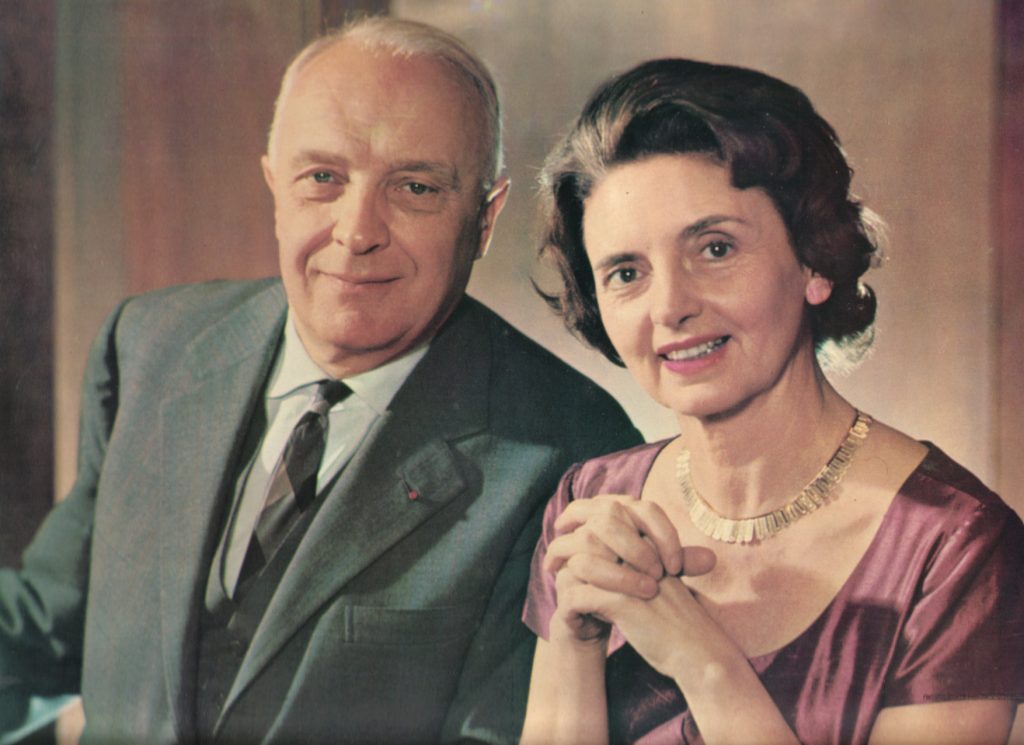
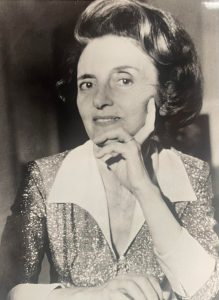 Together, Gaby and Robert make the deepest roots of the Cleveland International Piano Competition, founded in 1975 as the Robert Casadesus International Piano Competition. Gaby worked to establish the event in her husband’s memory shortly after Robert died in 1972, at 73 years old. Their relationship sprang from and continued to center around music as they grew older: even Gaby’s memoire is titled Mes Noces Musicale, or “My Musical Marriage.” They met at the Paris Conservatory during WWI, shortly after which Robert was deployed. He began to court her “by correspondence” just before the armistice was signed, and continued while he finished his service at Versailles and then Paris. They were married in 1921.
Gaby and Robert were both first-class pianists, but Robert’s break came when he was asked to step in for a sick pianist in a performance of Beethoven’s fourth concerto at the Paris Opera. He went on to perform over 3,000 concerts throughout his career. The quantity is impressive, but the quality he upheld through all of it is admirable. A letter he received from the infamous music theorist Nadia Boulanger, who worked with him at Fontainebleau, is a testament to the regard and acclamation he garnered from his colleagues. Boulanger wrote, in March 1945,
“Such perfection, such dignity, such taste! I must thank you. It is so seldom that one feels a joy of this quality—it goes a thousand times beyond its true reality... Your mastery, your thinking is of too much importance to let it pass by without stressing it. And from the bottom of my heart and the depths of my thoughts—as an artist—I come to congratulate you with a real joy and great pride... Everything depends on the upholding of values in the name of which you develop your art and, if I may, your soul.” (33)
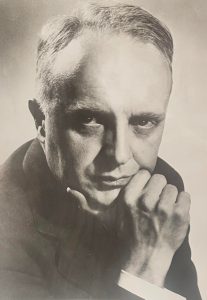 Robert was ostensibly destined to be a musician. Born in Paris in 1899, the Casadesus family was well known for their many successful creatives, many of whom deeply influenced Robert as he grew up. In her memoire, Gaby recalls the day Robert lost his grandfather. That morning, he learned that he had received a prize at the conservatory.
“He went to tell [his grandfather] the good news before going upstairs to the studio to show his uncles his exam. When he came back down, he found him dead, his newspaper on his lap. His grandfather was a little tired since he had had bronchitis a short time before, but nothing suggested such a sudden death. Did he die of joy at the news of his grandson’s prize? Robert was deeply affected by his sudden death. His grandfather meant a lot to him, and his entire life he remembered hearing him play the guitar or mandolin at night before going to bed” (15).
The same seems to have been true for Robert’s family, friends, colleagues, and students after he died: they cherished and celebrated memories of his music. Of their travels to the U.S., where Toscanini heard his New York debut and invited him to play with the New York Phil. Living next to Albert Einstein in Princeton and performing recitals with the famous scientist. Intimate collaborations with Ravel, with Leonard Bernstein, with George Szell. Composing dozens of works and recording one of the largest discographies of the 20th century. Creating an international piano competition was just one way they celebrated those memories. Through hard work and dedication, it would become one of the most renowned classical music competitions in the world.
The prize Robert won the morning of his grandfather’s death would forever be tied to memories of that formative relationship. And even though the CIPC no longer carries Robert’s name (the reason why is a story for another day), we celebrate his legacy and know that it will be forever tied to the prizes that promising pianists receive in our competition. Robert was admired by his colleagues, family, friends, and students alike. This was a teacher who drew students like a magnet—who inspired such things as selling shellacked seashells if it afforded the opportunity to study with him. It’s not something to forget.
As we at Piano Cleveland work to commemorate the 50th anniversary of the Cleveland competition, we reflect on what brought us to this point. Travelling into the archive, it would be impossible to miss Robert's mark. When I ask myself how to inspire appreciation for this history, I like to think of the advice Robert gave William Eves when he came to his piano lesson off a train from far away: “Begin as though the music has always been playing.”
Sources: institutional documents; Gaby Casadesus, Mes Noces Musicales (Paris: Buchet Chastel, 1994); articles within the special issue on Robert Casadesus, Piano Quarterly 30, no. 119 (Fall 1982).
Suzanna Feldkamp is a Ph.D. student in the musicology area at Case Western Reserve University. She has an M.A. and B.M. from Michigan State and conducts research on thirteenth-century French popular song.